Blending of Art and Engineering: How Metal Casting Unites Creativity with Industry
Wiki Article
Understanding Metal Casting Processes: Developments and Fads in the Foundry Market
The foundry sector is experiencing significant changes driven by technological improvements. Innovations such as 3D printing and synthetic intelligence are reshaping metal casting processes, improving efficiency and precision. Lasting practices are getting traction, stressing the value of ecological obligation. On top of that, the intro of innovative materials and automation is enhancing total casting quality. These growths suggest a crucial shift in the industry, raising inquiries concerning future directions and effects for manufacturers.Innovations in 3D Printing for Metal Casting
Recent developments in 3D printing modern technology have actually considerably changed the landscape of metal casting. The combination of additive manufacturing techniques has actually allowed the quick manufacturing of complicated patterns and mold and mildews that were formerly tough or impossible to attain with conventional methods. By making use of materials such as sand and metal powders, suppliers can develop elaborate geometries that boost layout flexibility and minimize product waste. This technology not only expedites the prototyping procedure however also permits the personalization of elements tailored to specific applications.
Furthermore, 3D printing assists in much shorter preparation, which is essential in markets calling for quick turnaround for components. The innovation also supports the manufacturing of lightweight structures, therefore boosting power effectiveness in end products. Because of this, the foundry sector is witnessing a change towards even more sustainable practices, driven by the effectiveness and precision supplied by these modern-day 3D printing strategies in metal casting procedures.
The Role of Artificial Knowledge in Precision Production
As markets significantly embrace sophisticated production modern technologies, synthetic knowledge (AI) is playing a crucial role in boosting precision production processes. AI formulas assess substantial datasets to optimize and identify patterns manufacturing parameters, resulting in boosted precision and efficiency. In metal casting, AI help in anticipating upkeep, lowering downtime by forecasting equipment failings before they occur.Additionally, AI-driven simulations make it possible for suppliers to model the casting procedure, refining designs and lessening flaws. Artificial intelligence techniques improve quality assurance by identifying anomalies in real-time, therefore making certain that just products satisfying rigorous requirements proceed via the production line.
Sustainable Practices in the Foundry Sector
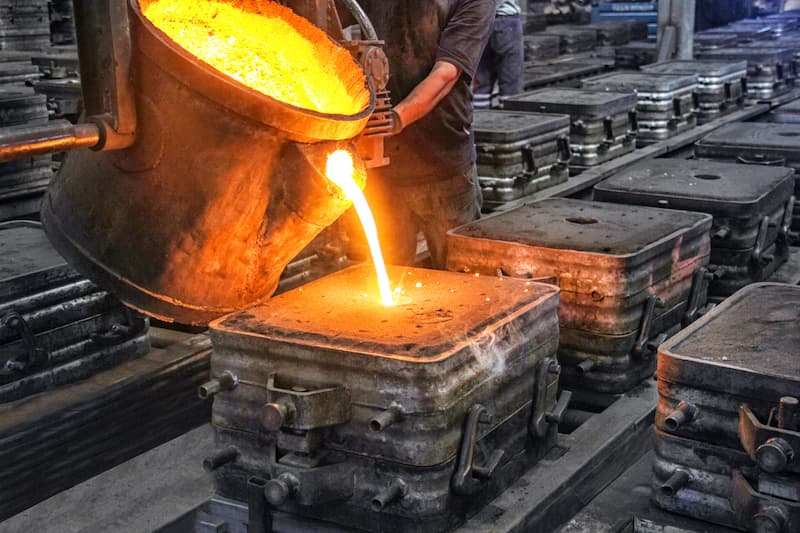
Sustainability has actually become an essential focus in the foundry industry, prompting makers to take on practices that reduce environmental effect while preserving efficiency - Metal Foundry. One famous approach consists of the recycling of products, specifically metals, which significantly lowers waste and energy intake. Foundries are increasingly executing closed-loop systems, enabling the reuse of sand and various other casting products, thereby reducing the need for virgin resourcesOn top of that, energy-efficient technologies, such as electric heating systems, are gaining grip, as they reduced greenhouse gas exhausts compared to traditional techniques. Lots of shops are discovering the usage of eco-friendly binders and eco-friendly finishes to minimize harmful by-products. Worker training on sustainable methods has also become important, fostering a culture of ecological obligation within companies. In general, these sustainable techniques not only contribute to environmental conservation yet additionally enhance the lasting stability of the foundry industry in an increasingly eco-conscious market.
Developments in Products for Boosted Casting High Quality
With the constant advancement of the foundry industry, innovations in materials have ended up being essential for enhancing casting high quality. Advanced alloys and composite products are progressively being made use of to enhance mechanical properties and lower defects in spreadings. These materials usually supply premium strength-to-weight proportions and improved resistance to deterioration and wear, dealing with the needs of modern applications.In addition, the unification of nanomaterials is acquiring traction, permitting for finer microstructures that result in enhanced surface finishes and dimensional precision. Aluminum Foundry. 3D printing modern technologies additionally play a function in creating intricate geometries with marginal waste, enabling making use of customized products that were previously challenging to cast
The development of environmentally friendly binders and ingredients adds to sustainable methods while maintaining top notch outcomes. Jointly, these developments not just enhance the performance of cast items yet also straighten with the market's change in the direction of sustainability and effectiveness.
Automation and Robotics in Metal Casting Procedures
Automation and robotics are reinventing steel casting procedures by improving and improving operations precision. In modern-day shops, robot systems are employed for tasks such as mold and mildew handling, putting, and finishing, considerably reducing human intervention. This not only decreases the threat of accidents yet also guarantees regular high quality in manufacturing.Automation innovations, such as computer system numerical control (CNC) devices, promote intricate layouts and intricate geometries that were formerly testing to achieve. Real-time data analytics enable producers to optimize and keep track of procedures performance continuously.
Keep track of The assimilation of automation brings about boosted efficiency and effectiveness, enabling factories to fulfill growing market needs while lowering preparations. As the industry embraces these developments, the labor force is additionally developing, calling for brand-new abilities to run and maintain sophisticated machinery. Overall, the fostering of automation and robotics is an essential fad shaping the future of steel casting procedures.
Often Asked Inquiries
What Is the Background of Metal Casting Strategies?
Metal casting methods go back to old human beings, with evidence of bronze casting in Mesopotamia around 3000 BCE. Over centuries, approaches progressed considerably, including developments in materials and modern technology, forming contemporary industrial techniques.Just How Does Metal Casting Impact the Setting?
Metal casting significantly affects the setting with power usage, emissions, and waste generation. Nonetheless, improvements in sustainable practices and modern technologies intend to minimize these effects, advertising more eco friendly approaches within the industry.What Precaution Are Critical in Foundries?
What Prevail Flaws in Metal Casting Products?
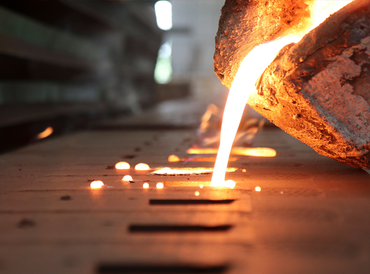
Typical issues in metal casting products consist of porosity, shrinking, misruns, chilly shuts, and surface area blemishes. These issues occur from variables such as inappropriate temperature level control, poor mold layout, and contamination during the casting process.Just How Do Foundries Make Sure Top Quality Control in Casting Processes?
Factories apply strenuous high quality control procedures through regular evaluations, standardized testing, process surveillance, and adherence to industry criteria. These techniques assist recognize problems early, making certain the integrity and dependability of the final casting products.Technologies such as 3D printing and artificial knowledge are improving steel casting procedures, boosting performance and precision. Current developments in 3D printing technology have actually considerably changed the landscape of steel casting. Automation and website robotics are revolutionizing metal casting procedures by boosting and enhancing operations precision. Metal casting methods day back to ancient people, with proof of bronze casting in Mesopotamia around 3000 BCE. Typical flaws in steel casting products consist of porosity, shrinking, misruns, cool shuts, and surface area imperfections.
Report this wiki page